Pages

Monday, June 23, 2014

Treefrogs in trees

Gray treefrogs (Hyla versicolor) are often heard calling from trees near and over wetlands.

Recording of the gray treefrog (from the Amphibian Research and Monitoring Initiative)

These frogs are often mistaken for birds because of their musical trill and calling location.
I recently found one calling from a branch in a small tree near a wetland.
Gray treefrog (circled in red) in small tree at edge of wetland
Zoomed in to see gray treefrog sitting on branch


The gray treefrog is found throughout much of Minnesota and can change from mottled gray to mottled green. (Link to MN DNR gray treefrog page).

Gray treefrog in 'gray' phase

Gray treefrog in 'green' phase


Thursday, June 19, 2014

Vernal Pool - Identification and Verification

Vernal pools are small seasonally flooded wetlands that provide vital habitat for many native amphibians and aquatic insects that require fish-free wetlands to survive. (Photos to right show a few examples of vernal pools in northern Minnesota)
Vernal Pool Workshops: History, Identification, and Monitoring in the MN Coastal Zone
 Join researchers from the Natural Resources Research Institute and participate in hands-on workshops investigating 'Vernal Pools' in the region. Workshops are free and open to the public. Participants will be introduced to methods for locating and identifying vernal pools. These workshops will help raise awareness about the value and importance of vernal pools.

Hartley Nature Center - April 26, 2014 10 am - 1 pm (Save the Frogs Day!)
Jay Cooke State Park – May 17, 2014 10 am - 1 pm
Tettagouche State Park – June 7, 2014 12 - 4 pm
Boulder Lake ELC - June 13, 2014 12 - 4 pm
Sugarloaf Nature Center - June 14, 2014 10 am - 1 pm
Grand Marais – June 28, 2014 12 - 4 pm

For more information:

Interested in Vernal Pool Workshops and Volunteering?

Submit vernal pool locations and data

Saturday, May 10, 2014

Finally spring in Duluth!

Spring has finally arrived in Duluth!

Vernal pools (small, temporary wetlands) are almost ice free and wood frogs and spring peepers are starting to breed. Get out and hear the chorus of the early spring breeding frogs - it only lasts a few weeks.

Video of spring peeper calling 
(another spring peeper and chorus of wood frogs in the background)

Spring peeper - with characteristic X on back
Wood frogs in amplexus
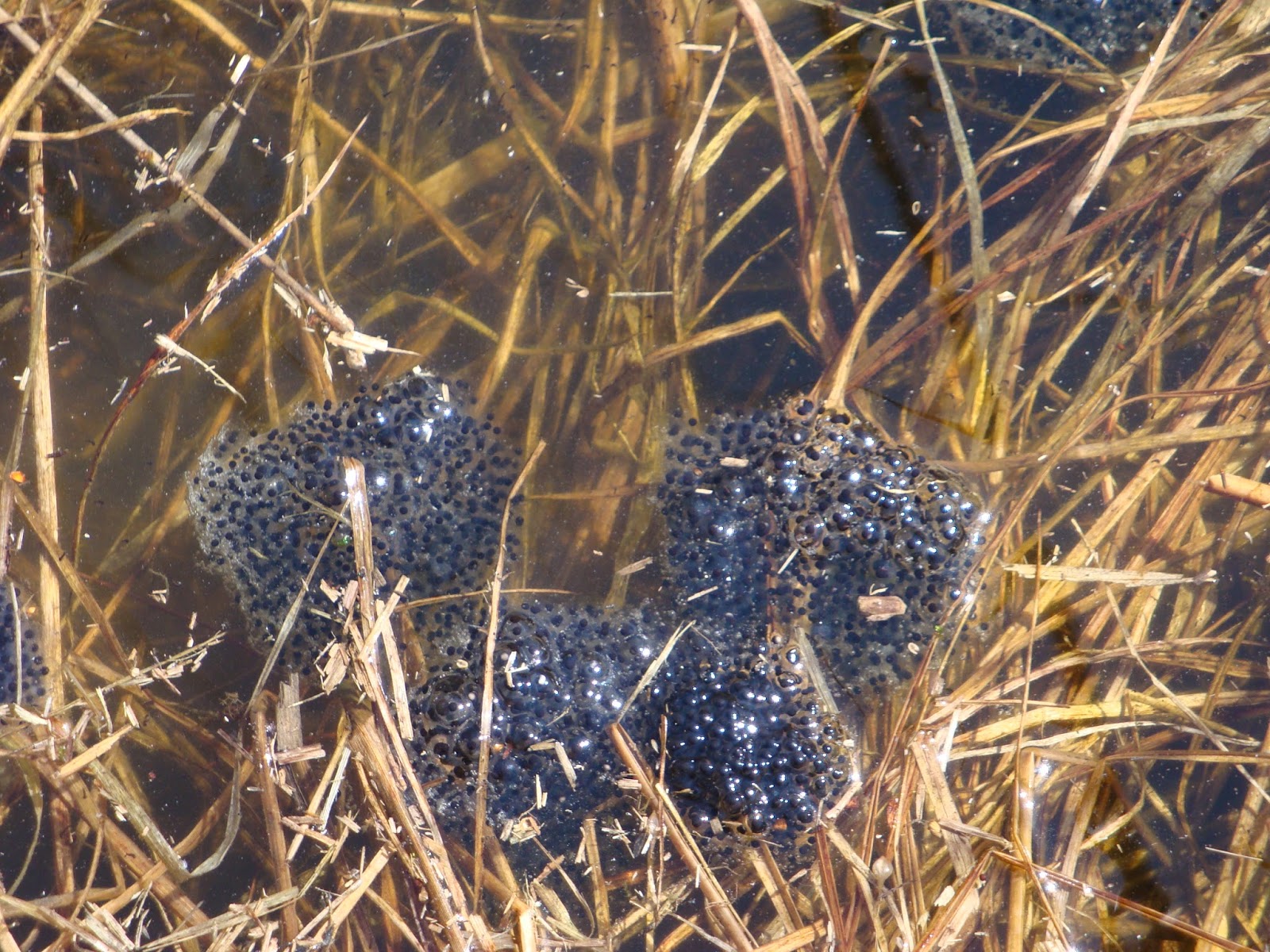
Newly laid wood frog eggs
 

Thursday, April 17, 2014

Citizen Science Frog Monitoring at Hartley Nature Center - April 26

DULUTH, Minn. – Outdoor enthusiasts of all ages are invited to learn about two research opportunities taking place at Hartley Nature Center, April 26 from 10 a.m. to 1 p.m. The Saturday workshop will provide information and hands-on activities for frog monitoring and vernal pool identification and assessment. Presentations and guided walks to vernal pools starting at 10 a.m., 11 a.m. and noon.

“Anyone who is looking for an excuse to hike in beautiful Hartley Park is welcome to join us to learn about data collection for our long-term frog monitoring project and vernal pool status in northeastern Minnesota,” explained Jennifer Olker, scientist at UMD’s Natural Resources Research Institute. Vernal pools are temporary ponds that are vital breeding habitat for many forest creatures. They are not currently protected in Minnesota and scientists lack critical information about them.
Vernal Pool in Early Spring
Workshop participants will learn about Minnesota’s frogs and toads, the current state of amphibians, importance of small wetlands, and how they can help, including two volunteer opportunities: 

Western Chorus Frog and Wood Frog
helping collect data

1) Frog Monitoring Project: conducting surveys at Hartley Park during three periods: April 25 – May 15, May 30 – June 15 and July 5 – July 20

2) Vernal Pool Identification and Field Verification: in Hartley Park and other locations across northeast Minnesota from snowmelt through July. 

Pre-registration is recommended by contacting Jennifer Olker at, jolker@d.umn.edu, 720-4344 or Ryan Hueffmeier, rhueffme@d.umn.edu, 720-4379.


April 26 is also national Save The Frogs Day, the world’s largest day of amphibian education and conservation action. Poetry and art contests are being held as part of the celebration. Learn more at www.savethefrogs.com.


The Natural Resources Research Institute’s mission is to foster the economic development of Minnesota’s natural resources in an environmentally sound manner to promote private sector employment.

Tuesday, July 17, 2012

Stories of frog malformations

"Whatever happened to the ‘deformed frogs’ problem?"
  
This is a question that we get all the time.

I have tried to answer it for Ask NRRI:
The ‘deformed frogs’ problem has not disappeared, even though it no longer makes the nightly news. Although the widespread occurrence of amphibian skeletal malformations has been considered an important environmental issue and researched extensively around the world, causes of these deformities in wild populations have been difficult to pinpoint.
One thing that scientists agree on is that deformities can result from multiple causes and that these causes vary from region to region. Scientists also believe that many of the causes are primarily due to, or exacerbated by, human activities. The major causes of malformations identified so far are chemical contaminants, parasites, and injuries from predators. At any given location, one or more of these factors could cause amphibian skeletal malformations as well as amphibian population declines. Additionally, the causes of malformations at one site may differ from those at another site.
Deformed frogs continue to be found across Minnesota and around the world, although rarely in huge outbreaks like that discovered in 1995 at Ney Pond in Le Sueur County, and other locations around Minnesota. Research continues to resolve uncertainties in the amphibian malformation phenomena.
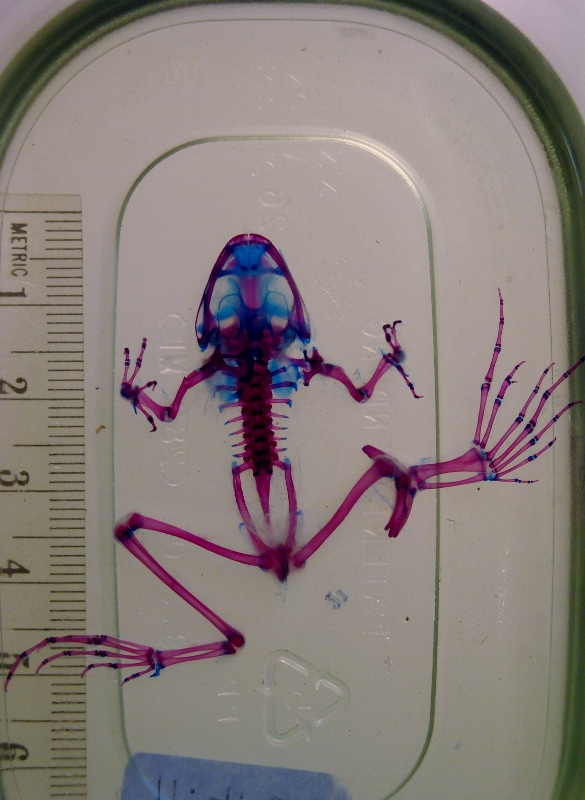
Malformed metamorphic Northern leopard frog with extra digits (© NRRI/UMD)
Malformed metamorphic Northern leopard frog with missing foot (© NRRI/UMD)


 There is also a new book out by Judy Helgen (Peril in the Ponds: Deformed frogs, politics, and a biologist's quest) which documents how the research on amphibian malformations got started and her efforts to solve this 'mystery'.

 Minnesota Public Radio covered this story this morning on Morning Edition (Deformed Minnesota frogs still largely a mystery 17 years later) and will be covering it again on All Things Considered (sometime between 3 and 6:30 pm). Here's a preview from the Bob Collins News Cut today (7/17/12):
 "Minnesota made headlines around the world in 1995 when school children discovered dozens of grossly deformed frogs in a pond in south central Minnesota. Soon there were more reports of deformed frogs from around Minnesota and other states -- gruesome pictures of frogs with extra legs, or missing legs, or eyes in the wrong place. Everyone wondered if the frogs were a sign that something was wrong in the environment that could also spell trouble for humans. Seventeen years later scientists still have not completely solved the mystery of what caused frogs to develop those deformities. But we do know more about how the investigation unfolded and how the case of the deformed frogs spawned a fight within the Minnesota Pollution Control Agency about whether the agency should even look into the matter. MPR's Stephanie Hemphill will have the story."
There is also an article on frog malformations in the local section of the Duluth News Tribune (printed MPR story).

Wednesday, May 9, 2012

Tadpoles and Marsh Marigolds

Wood frog tadpoles in Duluth are about 10 mm long right now (about the length of my pinkie finger nail). At this size, they are hard to photograph.

To put this development into perspective, on this day in 2011 the wood frog eggs had just started to hatch.

In many wetlands and ditches, marsh marigolds are blooming,

marsh marigolds - look for them in your neighborhood wetland or roadside ditch

wood frogs are still hanging around,
(adult)
and spring peepers and chorus frogs are calling (and laying eggs).
Spring peeper (adult)
Western chorus frog eggs - starting to develop

Friday, April 27, 2012

Fairy Shrimp

 Fairy shrimp are small crustaceans that live in the same small temporary wetlands that wood frogs use for breeding. These aquatic critters are fascinating to watch as they swim around upside down with their many leaf-like or feathery legs.

I recently found large numbers of fairy shrimp swimming around developing wood frog eggs. There were hundreds of them! I had never seen this before, so I tried to capture some pictures.
15+ fairy shrimp next to wood frog egg mass
close-up of one of the fairy shrimp
To learn more about Fairy Shrimp (and vernal pools) visit The Vernal Pool Association's website (based in Massachusetts).

Thursday, April 26, 2012

Wicked Big Puddles: What an Odd Spring

The strange spring and how it impacting vernal pools and amphibians is noticed in other parts of the country: Wicked Big Puddles: What an Odd Spring

FROM WICKED BIG PUDDLES: Dry pool in Stoneham, MA, 26 March, 2012

Monday, April 23, 2012

Wood frogs still calling

Wood frog adults and eggs appear to have survived the freezing temperatures last week. This frog species is well adapted to cold (it is the only amphibian in Alaska) and has started calling again after a break during the cold weather over the last week or so.

On Friday afternoon last week there were many frogs calling in Duluth parks and backyards. In a pond in Hartley Park, the wood frogs were making a huge racket (along with one spring peeper).
Wood Frog eggs in Hartley Park (about 2 weeks old)

Some wood frogs laid eggs 2 weeks ago, and many of these eggs are developing well. The small black embryos are elongated with visible heads and tails. In some locations they have started to emerge from the gelatinous envelopes of the eggs, but are not yet free-swimming. In the egg masses that I have been following, there are also many that are not developing due to the cold temperatures or other causes.
Developing wood frog embryos (black) in egg masses turned green from symbiotic algae (notice the dead eggs, which have almost entirely white centers)  

Wednesday, April 11, 2012

How are frogs impacted by the early spring?

The early spring could benefit or harm the frogs. We have several frog species that start calling (and breeding) as soon as the ice-melts in wetlands and small ponds.

The earliest breeder of these is the wood frog (Rana sylvatica), which sounds like quark-quark. This species emerges from hibernation as soon as the small wetlands they breed in have open water. Wood frogs can benefit from the early spring by breeding earlier, which gives their tadpoles longer time to grow over spring and summer. Bigger tadpoles turn into bigger froglets, which increases their likelihood of survival through the fall and following winter.
Adult wood frog
HOWEVER, early springs are often associated with low snow pack, which means that these small, usually temporary, ponds start the season with much lower water levels than in a typical spring. As these ponds are generally fed by snowmelt and precipitation (no, or little, connection to groundwater), the water levels at wood frog breeding time are directly tied to snowmelt, and maintaining adequate water levels for tadpoles to develop depends on spring and early summer rains. If the ponds dry up in June (even for just a few days), before the tadpoles metamorphose into frogs, the entire generation of frogs from the pond is lost.

Another impact of the early spring is the possibility of extended calling for wood frogs (who usually just call for a few days to a week) which could greatly exhaust the males as they wait for females to arrive in the ponds to lay eggs. Male frogs arrive in ponds first and beginning calling individually or in groups. Females arrive later, select a mate (based on factors we don't fully understand) and lay eggs. In an early spring, male wood frogs can start calling WEEKS before the eggs are laid - especially if the weather shifts between warm and cold several times a week. Frog calling is very energetically demanding activity, and male wood frogs complete breeding before foraging for food on the forest floor. If the warm spring weather starts and stops (as it has this year), the male wood frogs could get really worn out and deplete their energy reserves while calling on and off for multiple weeks while they wait for the weather to be consistently warm enough for the females to arrive and be ready to lay eggs.

(as posted on Ask NRRI)

Friday, April 6, 2012

Wood frog eggs - April 6, 2012

Reports of frog calls have been coming in for 2 weeks. First reports were on Friday March 23, 2012 from Hartley Park - the earliest date since I've been keeping track. Most likely these were all wood frogs.

Last week, frogs started and stopped calling a few times. Now I can say it is spring because the wood frogs have started laying eggs! I found my first wood frog eggs this afternoon, amidst a full chorus of calling wood frogs.
 
Example of wood frog eggs (freshly laid)

Lots of egg masses in one pond, but only a few in another - I expect egg laying will continue over the next few days.

Wood frogs are explosive breeders, meaning that they lay all their eggs during the same short stretch of days (usually in one central location per pond).


I will continue to follow the development of eggs and tadpoles in these and other ponds through the spring and summer.

Thursday, April 5, 2012

Early Spring in Duluth!

Reports of wood frogs calling are coming in weeks earlier than last year.

All you need to do to see the early spring is look out the window and remember what it looked like last year.

Wood frog breeding habitat - April 2011

In case you need more than your own eyes:

Scenes from an Early Spring - MPR report from last week

Saturday, August 13, 2011

Sign of a Healthy Lawn


I never thought about our city lawn as good frog habitat, but it must be a good location for hunting after some rain (and when the lawn is left a little longer).  This week there were two HUGE adult wood frogs hopping around in the lawn - the bigger one got away before I got to see it, but the smaller one was almost as wide as it was long. 


Seeing this frog, presumably gorging on the abundant insect life in our sunny lawn, reminded me why we don't use any chemicals on the lawn and try to limit chemical use on our property.  

Amphibians are very sensitive to chemicals released in the environment. 

Unfortunately, lawn care practices could be detrimental to the survival of urban frogs, toads, and salamanders due to the fact that homeowners use many times more pesticides per acre than applied in agricultural areas.

The most important things that you can do to protect amphibians in your yard are:
1) Choose non-chemical weed controls
2) Minimize fertilizer use
3) Minimize pesticide use
4) Provide natural habitat for foraging and corridors

More details can be found in the U.S. Fish and Wildlife Service's Homeowner's Guide to Protecting Frogs: Lawn and Garden Care or on the USFWS website.

Saturday, July 23, 2011

Wood Froglets

Less than three months after the eggs were laid, young wood frogs are emerging from ponds and wetlands around Duluth.  Wood frog metamorphosis occurs fairly quickly and can be easily observed in pond edges.  

Over the last two weeks wood frogs in Hartley Park transformed from 2 inch long tadpoles into froglets about 3/4" long. 

The rainstorms that have rolled through Duluth this week likely encouraged wood frogs to emerge from the wetlands. There are many froglets hopping along the wet forest floor - watch for them on the trails and your lawn. 
Wood frog at Gosner stage 40/41. Hindlimbs are fully developed, forelimbs are about to emerge from under skin.

Wood frog at Gosner stage 42. Forelimb just emerged, full tail remains.
 
Wood frog at Gosner stage 43. Tail somewhat reduced.

Wood frog at Gosner stage 44. Tail greatly reduced.

Wood frog at Gosner stage 45. Only small tail stub remains.
Another wood frog at Gosner stage 45.

Amphibian growth and development is dependent on many factors, including temperature, availability of food, water depth, and photoperiod (the amount of daylight).  Many amphibian species can accelerate or delay larval (tadpole) development and metamorphosis based on quality of their aquatic habitat. Although most wood frogs in a pond transform into froglets at approximately the same time (calling synchronous metamorphosis), multiple stages can usually be found during a visit.
 
Wood frogs resting on a floating board.  Top at Gosner stage 44 or 45, bottom at Gosner stage 42.

*The Gosner staging system was developed for Northern Leopard Frog (Rana pipiens) to identify key points in developmental progress from embryo through metamorphosis, also used for other Ranid species such as the wood frog (Rana sylvatica). citation: Gosner KL. 1960. A simplified table for staging anuran embryos and larvae with notes on identification. Herpetologica 16:183-90.

Sunday, June 19, 2011

For Father's Day: Great Frog Dads

The Giant African Bulfrog (Pyxicephalus adspersusmade #3 on Animal Planet's Top 10 Animal Dads! Like some of our local frog species, the Giant African Bulfrog lays eggs in temporary ponds - but after the eggs are laid, male frogs remain in the ponds to protect the eggs and tadpoles.

This BBC video show the bulfrog dad protecting tadpoles from predators and desiccation:

In addition to the Giant African Bulfrog, some other amphibians provide parental care for eggs and tadpoles.  For example, male midwife toads (genus Alytes) carry fertilized eggs on their backs until they are ready to hatch. A good summary of parental care in anurans (frogs and toads) can be found here.

In case you are wondering, none of the anurans that breed in Duluth exhibit parental care.  However, female Eastern red-backed salamanders (Plethodon cinereus) guard their eggs until they hatch.  More information about this entirely terrestrial salamander can be found at the University of Michigan Museum of Zoology's Animal Diversity Web.

Tuesday, June 7, 2011

Distracted by non-frog signs of summer

It is easy to get distracted by the non-amphibian phenology, such as the flowers blooming around Duluth.  The lilacs in my yard are just starting to open:

In addition to these signs of spring (and summer!), frog activity continues.  The early spring breeders have growing tadpoles that will begin to develop hind limbs soon, while the late season species have not yet started to breed.  Mid-season breeders, such as the gray treefrog, are just finishing up calling. Gray treefrogs generally call from trees over and around wetlands (and thus are often mistaken for birds), and lay their eggs in seasonal and temporary wetlands.
gray treefrog in a wetland - notice the large toe pads
Gray treefrogs change in color from bright green to mottled gray in seconds to aid with camouflage. The below frog does not match it's surrounding in color, but is still hard to detect!

just grass

is that a frog?

gray treefrog in grass clump in wetland

A few years ago, I was fortunate to find many gray treefrogs while sampling a wetland with students.  Check out the variation in color.
gray treefrogs can change from bright green to dark mottled gray

The Eastern gray tree frog (Hyla versicolor) and the Cope's gray tree frog (Hyla chrysoscelis) are both found in this region and there is not a reliable way to tell these species apart in the hand.  The only way to distinguish these species is the number of chromosomes (Eastern gray treefrog is tetraploid while Cope's gray treefrog is diploid) or the males' calls (see below videos).  Additionally, there are may be habitat preferences and behavior that distinguish these species - I look forward to future research revealing the similarities and differences between the Eastern gray treefrog and Cope's gray treefrog.


Monday, May 23, 2011

Toads and Friends

Before this foggy thunderstorm rolled into Duluth, the amphibians were very busy.  In the last two weeks, three species have begun calling: Northern leopard frog (Rana pipiens), American toad (Bufo americanus), and gray tree frog (Hyla versicolor).

Around Boulder Lake, the Northern leopard frogs started and finished calling in just four days. This species is considered an early breeding species, but tends to breed at few weeks after wood frogs in the northern reaches of Minnesota.
Adult Northern leopard frog
I only heard this species calling for one day and found eggs on the same day. We got a frost the night after I found these eggs, which seems to have damaged more than 50% of the embryos.  Each leopard frog lays up to 3,000 eggs, so there were plenty of tadpoles hatching late last week despite this frost damage.  


Amercian toad calling 
American toads began breeding late last week.
One day after hearing this species calling for the first time, American toads were calling in a full chorus and multiple pairs were laying eggs in the backwaters off of Boulder Lake.


Listen to this chorus of American toads heard last Friday May 20th:


Multiple pairs of American toads in amplexus (and some males)

American toads lay long double strings of eggs, which hatch in 2-8 days depending on water temperature.
Pair of american toads in amplexus (male on back of female)
-notice the strings of eggs under the pair-


American toad eggs - freshly laid


Gray treefrogs started calling last week, and Western chorus frogs and spring peepers continued to call.

Although spring peepers were in full chorus in Duluth city limits in late April, in some locations this species did not start calling until last week. A full chorus of spring peepers is so loud that it makes my ears ring after standing by the wetland for five minutes.
Spring peeper
Listen to this chorus of spring peepers heard last Wednesday May 18th: