Pages

Showing posts with label spring peeper. Show all posts

Saturday, May 10, 2014

Finally spring in Duluth!

Spring has finally arrived in Duluth!

Vernal pools (small, temporary wetlands) are almost ice free and wood frogs and spring peepers are starting to breed. Get out and hear the chorus of the early spring breeding frogs - it only lasts a few weeks.

Video of spring peeper calling 
(another spring peeper and chorus of wood frogs in the background)

Spring peeper - with characteristic X on back
Wood frogs in amplexus
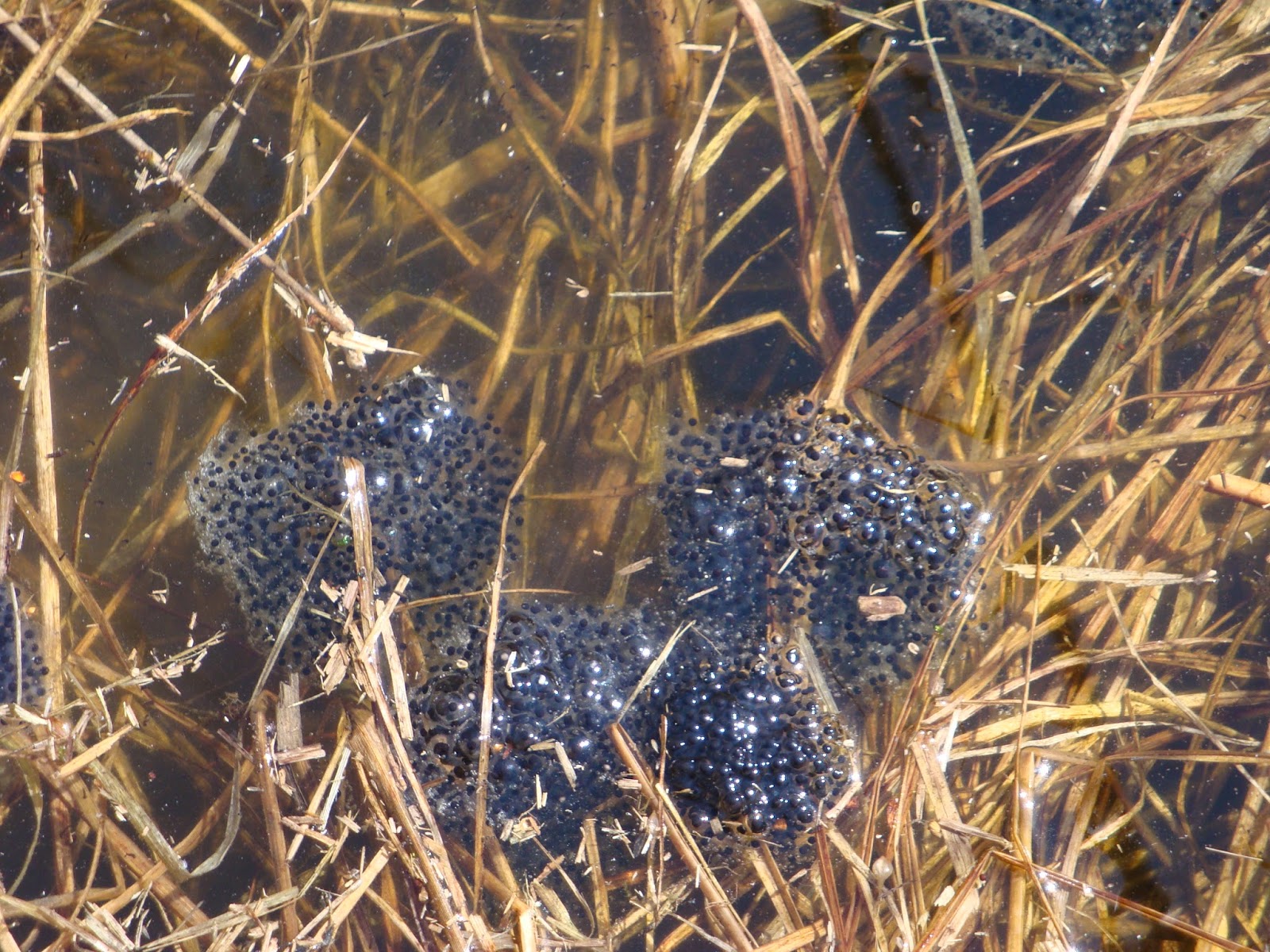
Newly laid wood frog eggs
 

Monday, May 23, 2011

Toads and Friends

Before this foggy thunderstorm rolled into Duluth, the amphibians were very busy.  In the last two weeks, three species have begun calling: Northern leopard frog (Rana pipiens), American toad (Bufo americanus), and gray tree frog (Hyla versicolor).

Around Boulder Lake, the Northern leopard frogs started and finished calling in just four days. This species is considered an early breeding species, but tends to breed at few weeks after wood frogs in the northern reaches of Minnesota.
Adult Northern leopard frog
I only heard this species calling for one day and found eggs on the same day. We got a frost the night after I found these eggs, which seems to have damaged more than 50% of the embryos.  Each leopard frog lays up to 3,000 eggs, so there were plenty of tadpoles hatching late last week despite this frost damage.  


Amercian toad calling 
American toads began breeding late last week.
One day after hearing this species calling for the first time, American toads were calling in a full chorus and multiple pairs were laying eggs in the backwaters off of Boulder Lake.


Listen to this chorus of American toads heard last Friday May 20th:


Multiple pairs of American toads in amplexus (and some males)

American toads lay long double strings of eggs, which hatch in 2-8 days depending on water temperature.
Pair of american toads in amplexus (male on back of female)
-notice the strings of eggs under the pair-


American toad eggs - freshly laid


Gray treefrogs started calling last week, and Western chorus frogs and spring peepers continued to call.

Although spring peepers were in full chorus in Duluth city limits in late April, in some locations this species did not start calling until last week. A full chorus of spring peepers is so loud that it makes my ears ring after standing by the wetland for five minutes.
Spring peeper
Listen to this chorus of spring peepers heard last Wednesday May 18th:

Sunday, April 17, 2011

Still waiting for spring

I have not received any new reports of frogs calling in the Duluth area since Thursday, when the temperatures dropped and then a snowstorm blew in.  The birds have continued to sing, so I don't doubt that spring is truly here.  However, this weather has probably slowed the frogs down.  I don't expect any more frog activity until it warms up again, probably Thursday based on the current weather predictions.

Wood frogs (Rana sylvatica) are the first to start calling around Duluth.  The wood frog call is usually described as 'quark-quark-quark' or duck-like. Wood frogs are easily recognizable by a dark mask and white lip line.  In overall color they range from light to dark brown and sometimes are pink or reddish. 
wood frog
Within a few days, wood frogs are joined by Western Chorus Frogs (Pseudacris triseriata) and Spring Peepers (Psedacris crucifer). Both of these frogs are very small, reaching only 1 inch or 1.5 inches as adults, but make very LOUD calls. Chorus frogs sound like running your thumb over a comb and spring peepers make a really loud 'peep' over and over. Chorus frogs range in color from tan to brown to green and can be recognized by the strips on their back. Spring peepers are generally light tan with a slightly darker brown X on their back. 
chorus frog

spring peeper


To see when frogs begin to call across North America see the map at Journey North Spring 2011 - First Frogs

Next week I'll give some tips on identifying wood frog eggs (along with photos).